
Secondary Mathematics Education, BS
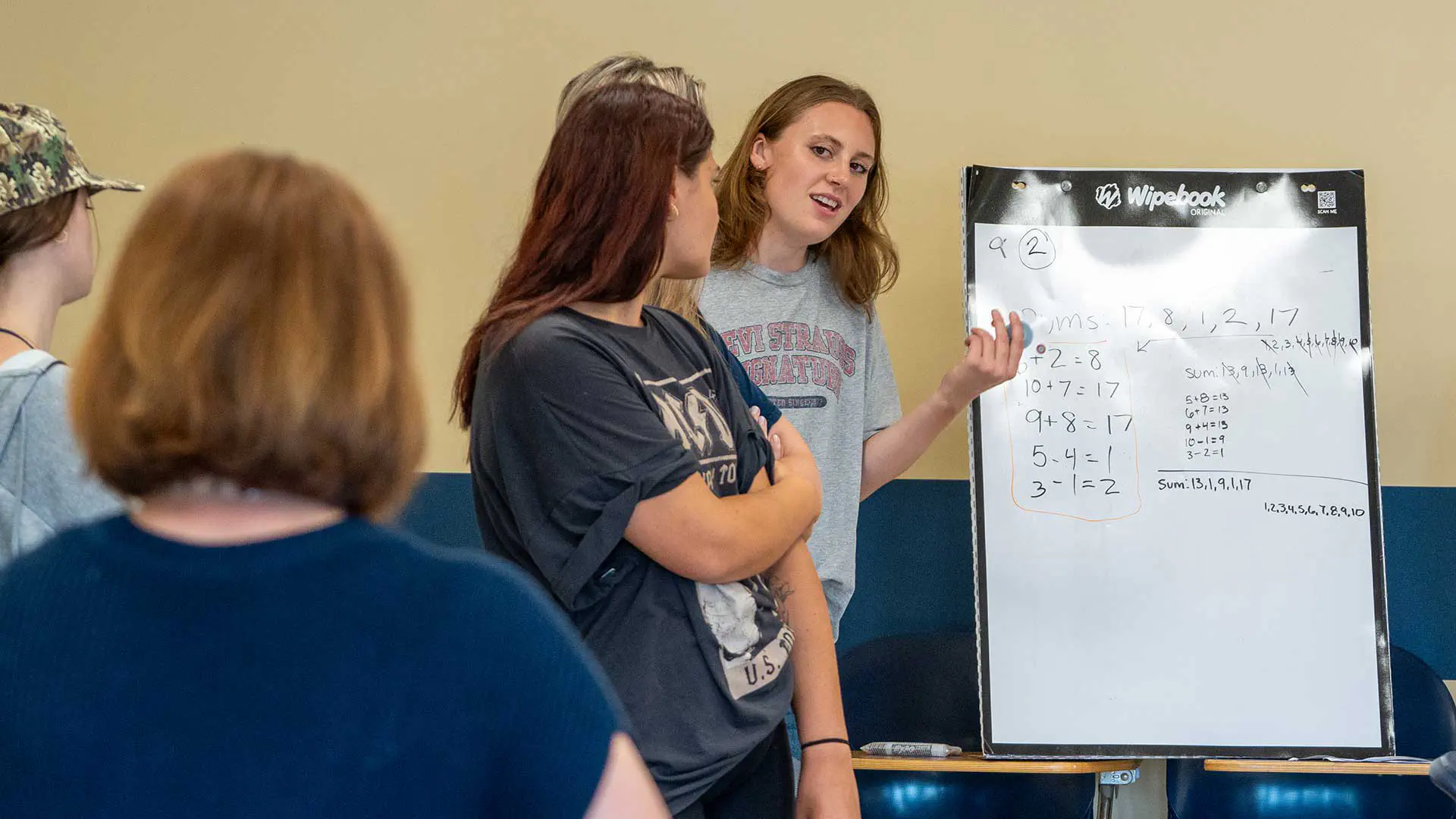
The Bachelor of Science in Secondary Mathematics Education prepares you to earn certification to teach mathematics (grades 5-12). As a student, you’ll graduate with more than 900 hours of hands-on experience by completing more than 125 hours of field observation before a yearlong residency in your final year, working alongside experienced teachers through strong partnerships with local schools.
You can also customize your path. The program is designed with flexibility in mind, allowing you to apply transfer credits, pursue general education electives, or add a minor or second major, particularly in mathematics or a related field. Depending on placement availability and program approval, you may also have the option to complete your final-year residency in your home community.
Coursework is informed by state and national standards and certification requirements, with a focus on the specialized work of teaching mathematics: understanding students and how they learn, curriculum design, instructional strategies, and school contexts. Faculty are active in the field as educators and scholars, bringing relevant expertise to your preparation.
Your Degree Plan
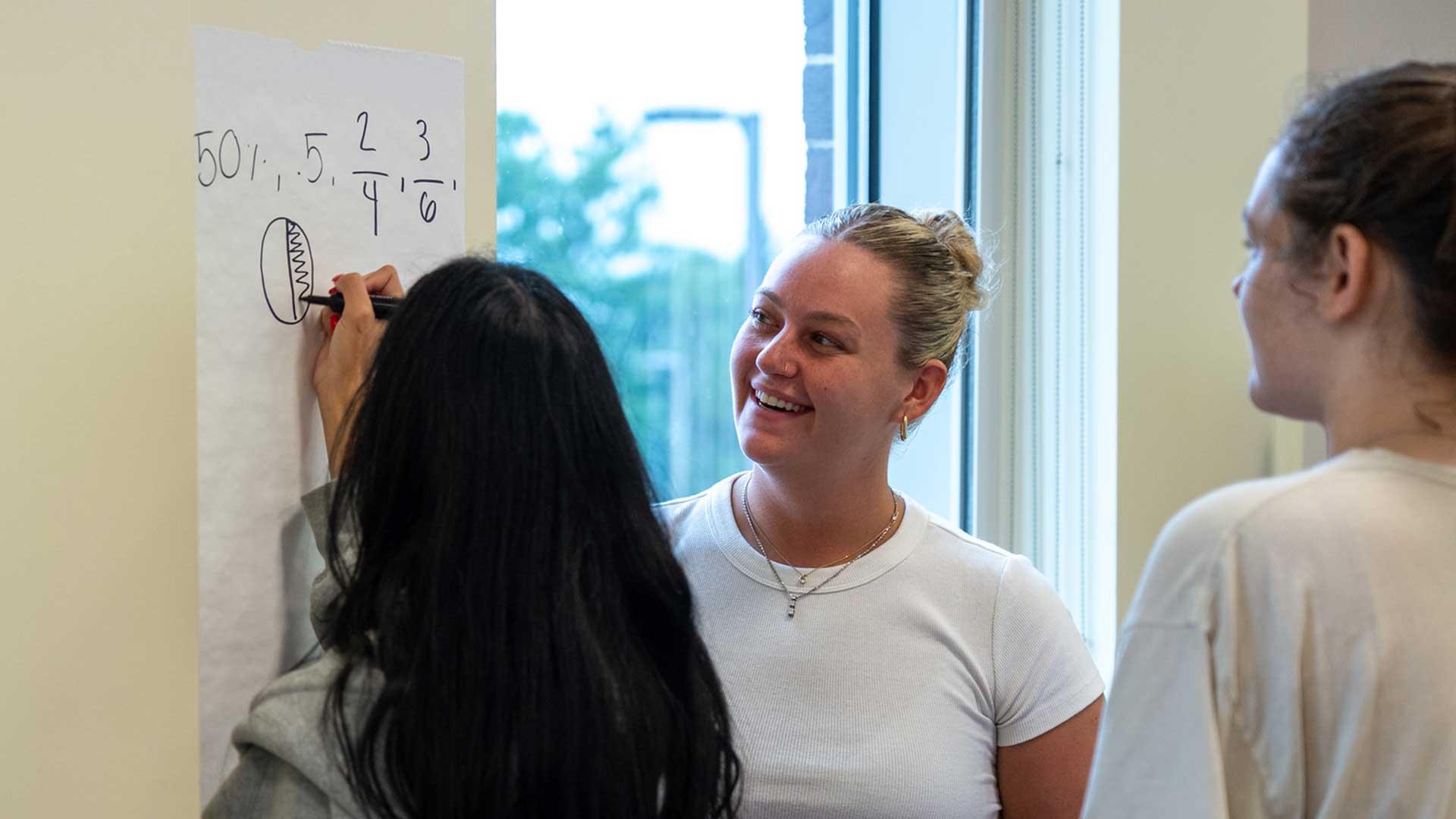
The coursework in the BS in Secondary Mathematics Education program combines rigorous mathematics content with courses focused on the work of teaching.
Mathematics Content
You’ll build your content knowledge through the calculus sequence (Calculus 1 and 2 and Multivariable Calculus), probability and statistics, geometry, the history of mathematics, and a course in foundations, functions, and regression models. This coursework gives you the specialized understanding of mathematics that effective teaching requires, including how mathematical ideas develop and connect across the curriculum.
Teaching Mathematics
A 2-course methods sequence focuses specifically on teaching and learning mathematics in secondary schools. Additional courses examine standards and curriculum in areas central to the middle and high school classroom, including geometric thinking and ratios and proportional reasoning.
Professional Courses
Core education coursework prepares you to work with all learners. You’ll study how to support students through place-based and emotionally responsive teaching, differentiated instruction, reading in the content areas, and special education in contemporary society. Throughout, you’ll apply what you’re learning during field and clinical placements in local schools.
History of Mathematics
MATH 218
Development of mathematics through calculus, with emphasis on mathematical theories and techniques of each period and their historical evolution.
Standards and Curriculum in Secondary Mathematics: Ratios and Proportional Reasoning
EDUC 436
A focus on the development of specialized content knowledge as well as curricular implications related to the teaching and learning of rational numbers, ratios, and proportional reasoning. Connected to state mathematics standards, the course emphasizes how these foundational topics are taught across middle and high school, including connections to other areas of mathematics such as algebra, geometry, and statistics.
Differentiation of Instruction
SPED 460
This course is designed to prepare prospective general and special education teachers to differentiate instruction to effectively meet the academic and social needs of the full range of students in inclusive settings within their schools.
Add a Minor or Second Major
The program’s built-in flexibility makes it possible to add a minor or second major, particularly in mathematics or a related field, deepening your content expertise and expanding your career options.
Honors
Expand your curiosity and enhance your curriculum through the WVU Honors College. Two programs are offered: Honors Foundations and Honors in Action.
The WVU Difference
What sets this program apart?
- Complete more than 900 hours of work in schools to practice your teaching and prepare you to enter the profession. You’ll complete more than 125 hours of field observation before your residency, working in a variety of public school classrooms with diverse student populations.
- Teacher-in-Residency. Spend your entire final year in a school classroom, with a half-time placement in the fall and a full-time placement in the spring, working alongside an experienced mentor teacher.
- Built-in certification support. The program prepares you for key certification milestones, including the Praxis II content exam and the edTPA performance assessment, with ongoing support from academic advisers and career development specialists in the CAHS Office of Student Success.
- Expert faculty. You’ll learn from faculty who are active in the field as educators and scholars, bringing relevant and robust expertise to their teaching
Learn by Doing
Get involved outside the classroom.
View all of the student organizations you can join.
EDUC 485: Residency/Technology Capstone in Secondary Education
This course is the capstone experience for the Secondary Mathematics Education program. Students submit a portfolio for the performance assessments required for certification, and a weekly seminar includes discussion of topics applicable to the classroom, technology, and analysis of planning, teaching, and assessment.
Careers and Outcomes
How does this degree prepare students for a career?
Secondary School Teachers
Median Salary: $64,580
Possible Job Titles: English Teacher, Mathematics Instructor (Math Instructor), Social Studies Teacher, Teacher
Middle School Teachers
Median Salary: $62,970
Possible Job Titles: Language Arts Teacher (LA Teacher), Math Teacher (Mathematics Teacher), Science Teacher Teacher
Tutors
Median Salary: $40,090
Possible Job Titles: Academic Coach, Academic Guidance Specialist, Professional Tutor, Tutor
Instructional Coordinators
May Require Graduate Degree
Median Salary: $74,720
Possible Job Titles: Curriculum and Instruction Director, Curriculum Coordinator, Instructional Designer, Instructional Technologist
Further your education
WVU graduate programs to consider:
Meet Your Community
The Secondary Mathematics Education family will inspire you.
Johnna Bolyard

Professional Highlights
- Outstanding Teaching Award, College of Human Resources and Education, WVU, 2021
- Mathematics Teacher of the Year - College Level, West Virginia Council of Teachers of Mathematics, 2015
- Outstanding Teaching Award, College of Human Resources and Education, WVU, 2010
Matthew Campbell

Professional Highlights
- Research emphasis on teacher education, teacher recruitment and retention, and teacher leadership
- Principal Investigator, Mountaineer Mathematics Master Teachers (M3T)
- President, West Virginia Council of Teachers of Mathematics (WVCTM), 2022-2024
- Associate Vice President, AMTE STaR Fundraising Committee, 2023-2026
- Editorial Panel Chair, Mathematics Teacher Educator, 2021-2022
Places and Spaces
See where you’ll study, research, and create.
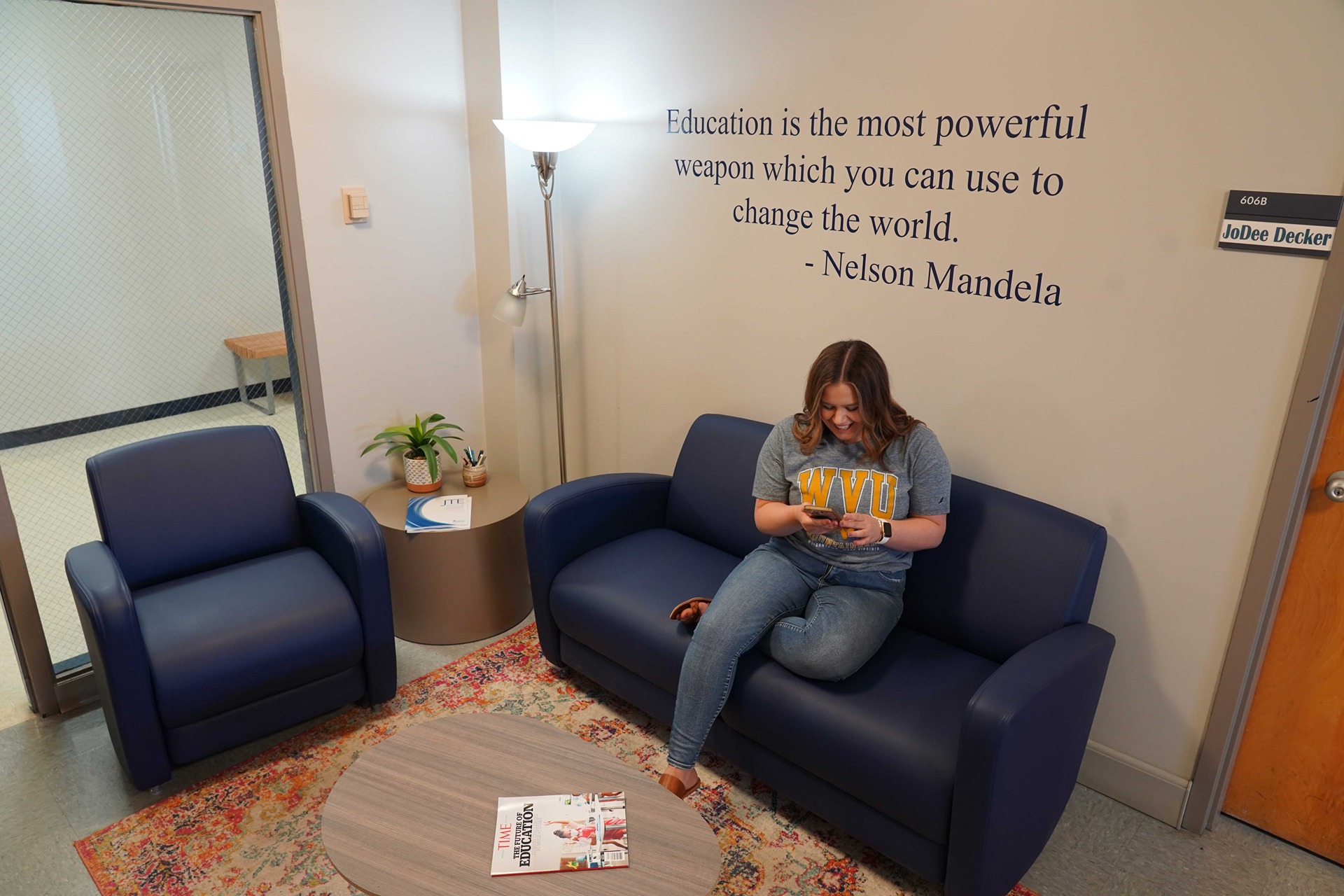
Allen Hall Lounge
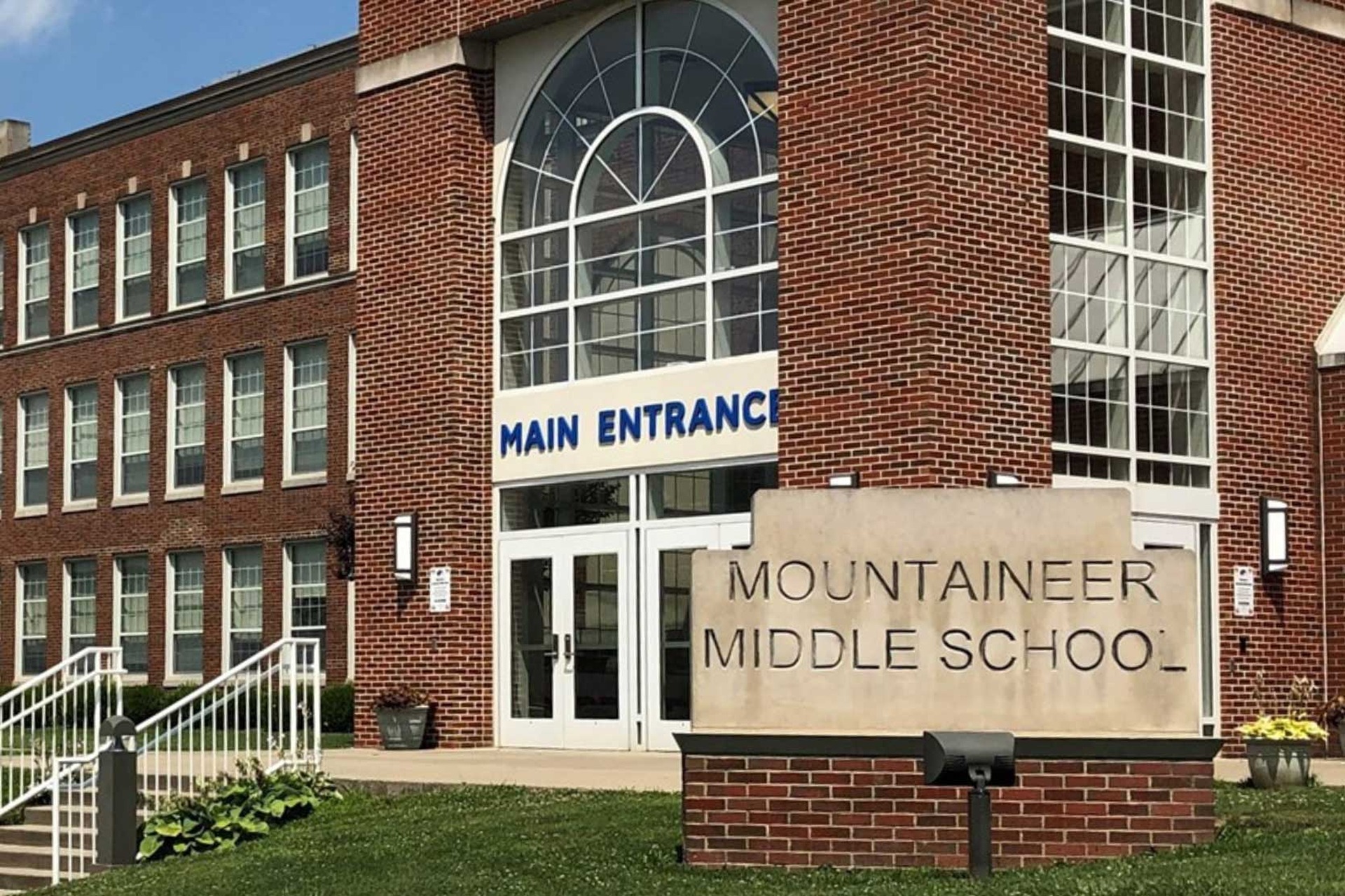
Local Middle and High Schools
Virtual Tour
It’s the next best thing to being here. Virtually tour our campus and residence halls.
Student Life
You'll experience epic traditions, quality academics, and a supportive community that feels like home.
Visit
See WVU in person and start imagining life as a Mountaineer.
Admission Requirements
To be admitted to the Secondary Mathematics Education major, first-time freshmen must meet WVU's first-time freshman admission requirements. Interested in transferring? Review the transfer admission requirements.
Tuition and Aid
How much does Secondary Mathematics Education at WVU cost? And how can you save?
Tuition and Fees
Estimated rates are available on our tuition website. Anyone who is not a current West Virginia resident, including international students, will be charged non-resident rates.
Ways to Save
Beyond scholarships, here are other ways to reduce your cost of attending WVU.
Financial Aid
The most important step toward funding your future with financial aid for the Secondary Mathematics Education, BS is submitting the Free Application for Federal Student Aid, or FAFSA.
Start at Another WVU Campus
You can start your career with WVU at another campus and transfer to WVU Morgantown.
Transfer Articulation Agreements
To simplify the transfer process, we have formal agreements with certain institutions. These agreements outline the courses you should take to prepare for transferring to WVU.
Review the full list of transfer articulation agreements to see if your institution is listed.
Request Info
Want to know more about Secondary Mathematics Education at WVU? Fill out our request form to receive more information.
Visit
Experiencing campus is the best way to see if WVU is the right fit. Choose from in-person and virtual options.